
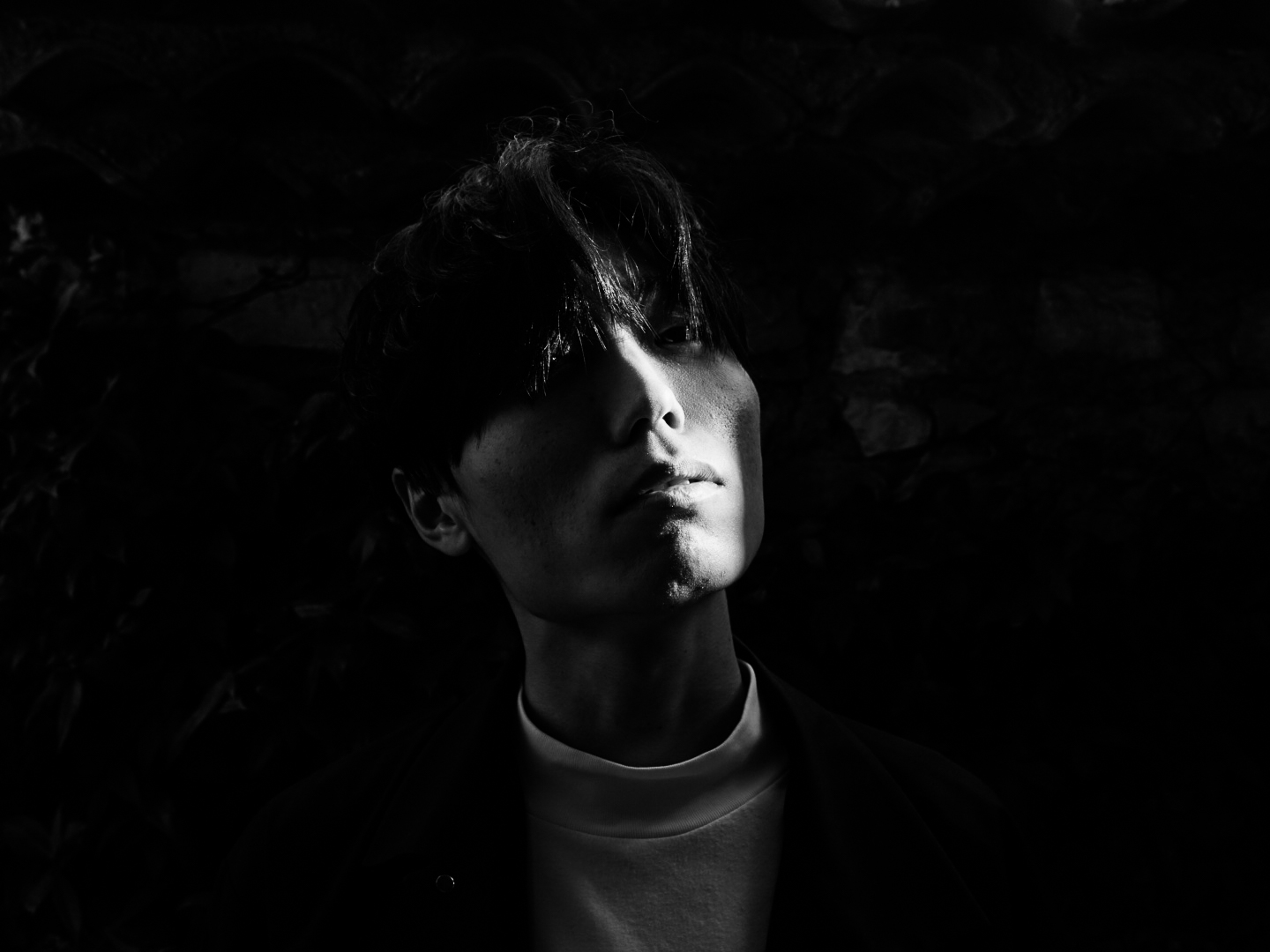
Kazutomo Suzuki / 鈴木 和智
Born in 1996 in Nagoya, Aichi Prefecture, Japan. Studied comparative and development education at the University of Tsukuba.
In 2017, founded the NPO LES WORLD, traveling to orphanages and slums around the world to co-create musicals and video works with children. Over the past nine years, the organization has collaborated with more than 3,000 young people and children across 14 countries. Within Japan, LES WORLD has also organized a variety of music festivals and events, designing each space as a participatory installation, and creating opportunities for over 3,500 people to engage in collective expression and dialogue.
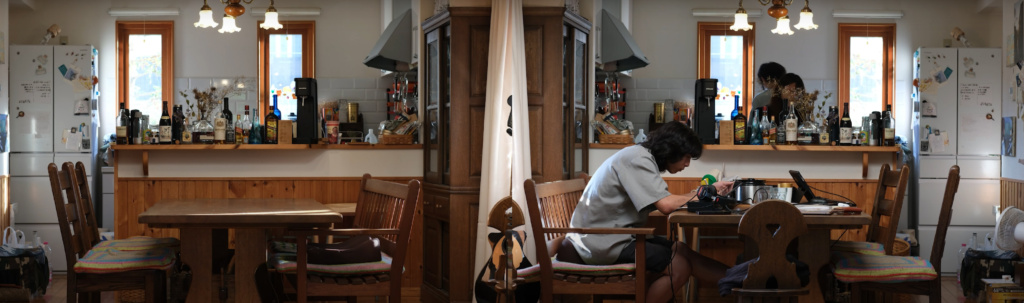
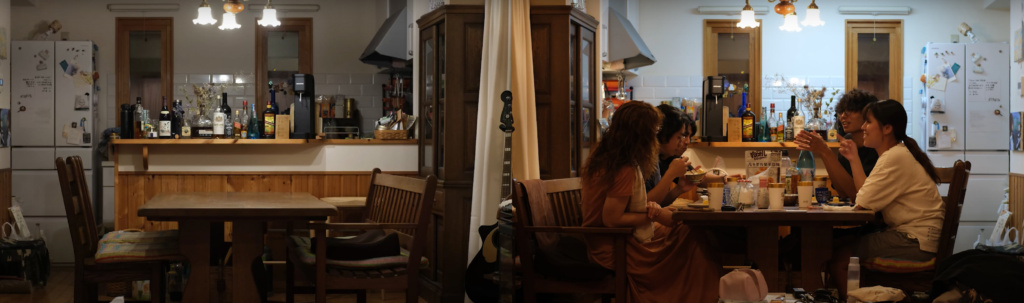
Since 2020, has opened their own home as a share house and continues to live in that style today. Following the suicide of their biological mother during the same period, the moments of conflict and coexistence with house residents, who shared daily life more deeply than even family, and with those who gathered from all over the country, became the catalyst for their current artistic practice.
Whether working individually or collaboratively, the foundation of their practice lies in the persistent question: why is it so difficult for people to simply live side by side? Their work explores responses to this question through various approaches and forms.
In 2023, began a new spatial design practice through gardening and planting in public spaces. Since 2024, has launched THE ONE, a large-scale international project that invites children from across Asia and Africa to create a stage performance together. The most recent production brought together 50 cast members, 100 staff, and an audience of 1,100 people, demonstrating a continued expansion of their practice across multiple domains.
Statement
We have become all too accustomed to relationships in which there is no need to see the “face” of the other.
In a world shaped by anonymous networks, the erosion of corporeality, and algorithmic fragmentation, connections devoid of imagination quietly standardize and optimize us, cultivating a culture that welcomes totality and exclusionary ideologies.
Through the experience of living in a share house, I began to reexamine how we relate to others through resonance, and the importance of fleeting moments that emerge only in the here and now.
These experiences functioned much like Resonanz, as articulated by Hartmut Rosa in response to a world of acceleration and control, or like the space of appearance (Raum des Erscheinens) that Hannah Arendt described, where action is born.
Since then, my practice has drawn inspiration from diverse fields such as the humanities and biology, focusing on the entanglements between acts and phenomena within daily life, between objects and nature, space and people.
Through installation works, I seek to create moments in which the self and the other may confirm one another’s presence in the world, where relations as co-being arise not through force, but as something that happens naturally.
At the center of each work is always the human being present.
What a person experiences, feels, and carries away from the space matters more than any visual or material element.
Rather than remaining a “viewer” in the conventional sense, someone who observes and evaluates, a person is exposed, body and all, to situations in which they are compelled to enter into relation with others and the space itself.
Even before the artwork reveals itself, something more fundamental occurs: a human being appears before another.
This marks a shift in the aesthetics of relation, from relation as something that is, to relation as something that happens.
It is a space where the center of gravity in art shifts:
from spectatorship to co-presence,
from thought to resonance,
from documentation to transformation.
It is, I believe, precisely what could be called a poetics of relation.
Therefore, the significance of this practice as art lies in its ability to introduce living event-ness into the institutional structures and evaluative frameworks of galleries and museums.
Rather than deconstructing the existing systems, I wish to propose a new form of experience that lies beyond mere harmony, an alternative space of possibility.
There is meaning in an approach that seeks not denial, but reconciliation.
This hybridizing stance holds essential value, not only for art, but also for the world in which we live today.
Brief History
1996 born in Aichi, Japan
2015 enter University of Tsukuba
2017 establish “the traveling entertainment troupe” LES WORLD
2020 start the career as an artist
Past Shows
2021/03/03-07 Kyoto Kyocera Art Museum.(competition, won 2 prizes)
2021/04/19-26 session 2021|Ginza Art Point.(group)
2021/08/13 Saatchi Gallery, LONDON.(group)
2021/08/16-22 FOLD Gallery, LONDON.(group)
2021/11/09-14 SOLO show I am Dancing in the Water (Nine Gallery, Tokyo)
Archives
2020~ 《家》
2022/05/01-04 “an Encounter”.
2022/09/04-07 “aida”
2023/05/04-07 “a forest – communus”
2024/05/03-06 Once the glass is filled and the water spills onto the earth, we can no longer tell it apart from the world.
2024/10/11 a diner
2025/05/03-06 I found it(you).
Awards
2021/03 Sosho Mochida Awards, AIDS Achievement Award (Kyoto Kyocera Art Museum)
©kazutomo suzuki, All Rights Reserved.